Teach IT! Why Digital Literacy Skills are Essential for Today's Students
- Colleen Hallett

- Feb 3, 2022
- 3 min read
Updated: Feb 19, 2022
How can teachers help their students be positive and responsible members of the digital community? A great place to start is with the implementation of pedagogical approaches from the Center for Media Literacy (CML), Dr. Mike Ribble, and Amanda Brace.
What is Digital Literacy?

Do you see your real-world and digital identities as being two separate entities? Our daily activities in the physical world intertwine with digital interactions, making it difficult to draw clear boundaries between the two. According to Nathan Jurgenson, "what we do while connected is inseparable from what we do when disconnected... We can't log off."
Our students have entered a world where their digital and physical selves become more inseparable with each passing day. As a result, we teachers must ensure that they are equipped with the skills necessary for safe and responsible online interactions. Implementing pedagogical tools centered around themes of media literacy is the first step towards shaping the digital citizens of tomorrow.
"...digital tools have fundamentally transformed the world, and the reality of children’s lives. We owe it to our children and youth to separate fact from fiction, and help support them to get the best start in life." - Andreas Schleicher, OECD (Organization for Economic Cooperation and Development)
So what is digital literacy? According to Manitoba's K-12 ICT Curriculum, "Literacy with Information and Communication Technology (LwICT) means thinking critically and creatively, about information and about communication, as citizens of the global community, while using ICT safely, responsibly and ethically."
The following video by Amanda Brace offers a student-friendly introduction to the concepts of digital literacy, and the skills needed to navigate the digital sphere in a safe manner.
Teaching Digital Literacy
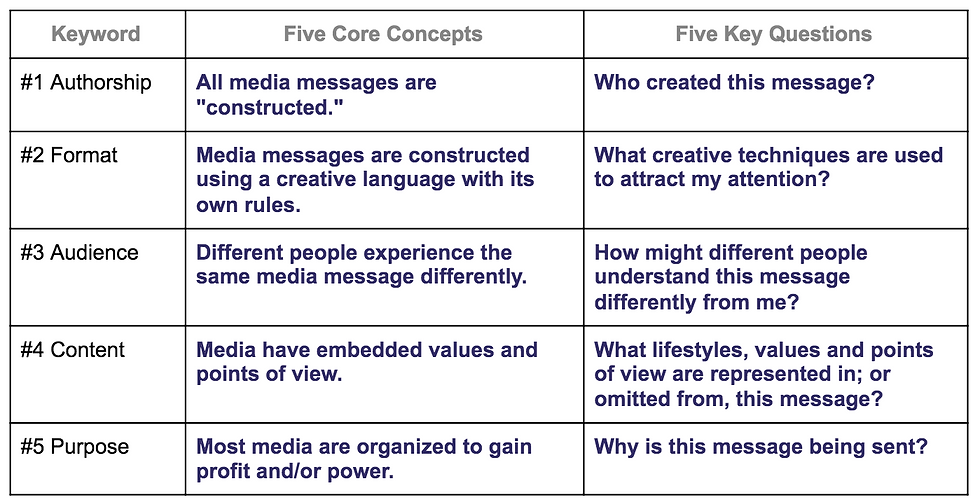
The internet is riddled with false information that aims to mislead consumers, sell products, and impact democratic decision-making. Students require critical-thinking skills in order to discern the "who, what, when, where, and why" of online messages. The Center for Media Literacy (CML) has developed an "inquiry-based" pedagogical model that revolves around five essential concepts, empowering students to analyze what they see. This framework would be an excellent addition to other digital literacy tools being utilized in the classroom, such as CIVIX.
Center for Media Literacy's Framework:
What is Digital Citizenship?
According to Mike Ribble (EdD), digital citizenship is defined as "the continuously developing norms of appropriate, responsible, and empowered technology use." By implementing Dr. Ribble's Nine Elements of Digital Citizenship into our classrooms, we can help students build skills that will enable them to become leaders, understand that their actions have consequences, and collaborate to bring about positive change.
"The better educated or 'digitally fluent,' students are, the more likely they are to make good decisions online, like supporting others instead of making negative comments." - Dr. Mike Ribble
Dr. Ribble's Nine Elements of Digital Citizenship
The Nine Elements are as follows:
Access: equitable distribution of technology and online resources.
Commerce: electronic buying and selling of goods.
Communication and Collaboration: electronic exchange of digital information.
Etiquette: standards and procedures of conduct when interacting with others.
Fluency: the process of understanding technology and its use.
Health and Welfare: physical and psychological wellbeing in a digital world.
Law: electronic responsibility for actions and deeds.
Rights and Responsibilities: requirements and freedoms extended to everyone.
Security and Privacy: electronic precautions to guarantee safety.
S3 Framework (Safe, Savvy, and Social)
The tenets of S3 are guiding principles that aim to support and reinforce the Nine Elements framework while helping students create good habits of digital citizenship, and "fully realize the possibilities of the online experience."
Safe: protect yourself and others.
Savvy: educate yourself and connect with others.
Social: respect yourself and others.
Click here to explore the Nine Elements and the S3 Framework in greater detail.
Great teachers are committed to making the world a better place through the positive impacts they have on their students. Ensuring that students are equipped with digital literacy skills is an effective way to make tomorrow a brighter place.


Comments